Women of Many Nations
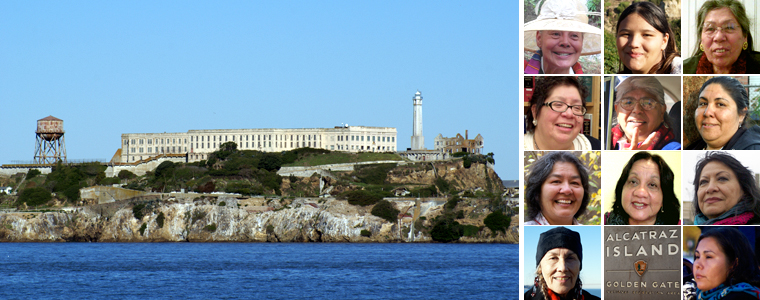
Mother, grandmother, daughter, activist, leader, educator, tribal chair, registered nurse, physician, student, musician, artist, administrative officer, and Ph.D. in political science
Interviewed: October 2010 – January 2011
Alcatraz Island in San Francisco Bay has always been sacred to the Ohlone and to Indigenous people of this continent. However, the US government used the island as a military prison and jailed many American Indian war and spiritual leaders to eradicate Native Americans’ identity, culture, and land during the “Conquest of the West.”
In 1934, the U.S. government turned the island into a federal prison. 29 years later, the prison was closed and became federal surplus property. Federal law requires that surplus property go back to indigenous people. As a result, in 1964, the Sioux landing party claimed the island under this provision in their treaty and claimed Alcatraz on behalf of all American Indian people. This claim was ignored, and in 1969, the city of San Francisco approved a Texas millionaire’s development plan on the island. This is when Native American students in the San Francisco Bay Area claimed the island again on behalf of all American Indian people, beginning the 19-month occupation of Alcatraz.
This is the story of the American Indian women of many nations whose lives have been transformed through the 1969-1971 Alcatraz occupation. In this story, these women share their connection to Alcatraz, how the occupation has continued to impact their lives today, and what they hope to see on Alcatraz in the future. They are the women who remind us that they are still here. As women, they are the caretakers, peace makers, and nurturers who continue to inspire future generations.
This video is part of the powerful exhibit titled “Welcome to Indian Land: Resistance, Resilience, and Activism on Alcatraz.” This exhibit opened in the fall of 2025 on Alcatraz Island and aims to educate the public about the rich history and ongoing struggles of Indigenous peoples. Through impactful imagery and narratives, it highlights themes of resistance and resilience, providing visitors with a deeper understanding of the significance of Alcatraz in the context of Indigenous activism.